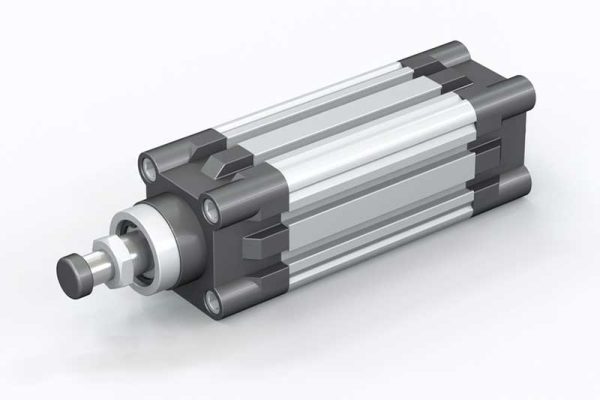
In the world of industrial automation, an actuator is the “muscle” of the machine. While the controller acts as the brain, the actuator is what actually moves or controls a mechanism. Choosing the wrong one can lead to slow production, frequent breakdowns, or wasted money.
This guide will break down how to pick the right actuator for your specific needs without getting lost in overly complex engineering jargon.
What Does an Actuator Actually Do?
Before we look at selection, we need to understand the basic job of an actuator. It takes energy—whether that energy is electricity, compressed air, or fluid—and converts it into physical motion. This motion can be a straight line (linear) or a circular movement (rotary).
Step 1: Define the Type of Motion Required
The first question you must answer is: Which way does it need to move?
Linear Actuators
These are used when you need to push, pull, lift, or lower something in a straight line. If your automation system needs to move a box from one conveyor belt to another, you are likely looking for a linear actuator.
Rotary Actuators
These provide circular motion. Think of a valve turning 90 degrees to shut off a pipe, or a robotic arm joint rotating. If the movement involves an angle or a full circle, rotary is the way to go.
Step 2: Choose the Power Source
There are three main “flavors” of actuators based on how they are powered. Each has pros and cons.
1. Electric Actuators
These are the most popular in modern smart factories. They use an electric motor to create movement.
-
Pros: Very precise, easy to program, and quiet.
-
Cons: Higher initial cost; they can overheat if used constantly without a break.
2. Pneumatic Actuators (Air Powered)
These use compressed air to move a piston.
-
Pros: Very fast and affordable. They are also safe to use in areas where sparks might cause an explosion.
-
Cons: They are not very precise. They are either “all the way open” or “all the way closed.”
3. Hydraulic Actuators (Liquid Powered)
These use pressurized oil or fluid.
-
Pros: Incredible strength. If you need to lift several tons, you need hydraulics.
-
Cons: They are messy if they leak and require a lot of extra equipment like pumps and tanks.
Step 3: Calculate the Load and Force
“Load” refers to how much weight the actuator needs to move. “Force” is how much effort is required to move that load.
When calculating force, don’t just think about the weight of the object. You must also consider:
-
Friction: Is the object sliding on a rough surface?
-
Direction: Is it lifting against gravity or pushing horizontally?
-
Speed: Do you need to move the weight very quickly? Faster speeds usually require more force to start and stop the movement.
Pro Tip: Always choose an actuator that can handle about 20% to 30% more force than your maximum calculation. This “safety margin” prevents the motor from burning out.
Step 4: Understanding Precision and Repeatability
In B2B manufacturing, consistency is everything. You need to know two things:
-
Accuracy: Can the actuator move to the exact spot you told it to?
-
Repeatability: Can it move to that same spot 10,000 times in a row without shifting a millimeter?
If you are building a machine that labels small medicine bottles, you need high precision (Electric). If you are just pushing scrap metal into a bin, precision doesn’t matter as much (Pneumatic).
Step 5: The Working Environment
Where will this actuator live? The environment can kill an actuator faster than heavy use.
-
Temperature: Extreme heat can melt seals; extreme cold can make lubricants thick and sluggish.
-
Moisture and Dust: If the factory is dusty or requires “wash-downs” with water (like in food processing), you need an IP-rated actuator. Look for IP65 or IP67 ratings for water resistance.
-
Chemicals: If the actuator is near corrosive chemicals, look for stainless steel housings.
Step 6: Speed and Duty Cycle
Speed
How fast does the task need to be completed?
-
Pneumatic actuators are the kings of speed.
-
Electric actuators offer controlled speed, meaning they can slow down before they hit the end of their path to avoid a hard “clunk.”
Duty Cycle
This is a fancy way of asking: “How much rest does the machine need?” If an actuator has a 50% duty cycle, it should only be moving for 30 seconds out of every minute. If you run it 100% of the time, it will break. For 24/7 assembly lines, you must select an actuator rated for “Continuous Duty.”
Summary Checklist for Buyers
Before you contact a supplier, have these details ready:
-
Total Weight: How heavy is the load?
-
Stroke Length: How far does it need to move (in mm or inches)?
-
Voltage: Do you have 12V, 24V, or AC power available?
-
Space: How much physical room is available for the actuator?
-
Budget: Do you want low cost now (Pneumatic) or low energy costs later (Electric)?
Conclusion
Selecting the right actuator is a balance between power, precision, and price. For most B2B foreign trade clients, Electric Actuators are becoming the standard because they integrate easily with AI and computer-controlled systems. However, never overlook the simple power of a pneumatic cylinder for high-speed, simple tasks.